-
Written By Shivam Rathore
-
Updated on May 15th, 2026
Resolve SQL Server Error 8998: DBCC CHECKDB Repair Guide
User Query: I tried to access my SQL data, but I am facing SQL Server error 8998 and am not able to recover my data. How do I resolve SQL Server Error 8998 and repair a corrupted database safely?
Error 8998 means your SQL Server database has corrupted pages and needs immediate attention. Hasty restores or repair commands can remove data you still need. You need an effective solution and a proper strategy to resolve SQL Server error 8998. DatabaseFileRecovery SQL Database Recovery lets you inspect corruption and recover files with minimal data loss. This article covers fast diagnostics, step‑by‑step restore methods, and guidance on using DBCC repair only when recovery using backups is not possible.
Download Now Purchase Now
What Does SQL Server Error 8998 Mean?
This error comes up when SQL Server has difficulty reading the pages that manage space allocation. In simple terms, it starts losing track of where and how data is stored. When they get damaged, SQL Server can no longer confirm whether data is stored correctly.
To break it down simply:
- GAM keeps track of which space is already used.
- SGAM handles shared space between objects.
- PFS checks how much free space is left on pages.
If any of these get corrupted, the database loses track of its own structure.
What Usually Causes This Error?
This kind of issue does not just appear randomly. Usually, something goes wrong at the system or storage level
- Disk issues can quietly damage database pages over time.
- Power loss during writes can leave data half-written.
- Sometimes, unwanted programs end up touching database files.
- If SQL Server crashes at the wrong time, changes may not finish saving.
- Storage issues can quietly damage how page details are stored.
Why You Should Take It Seriously?
When Error 8998 shows up, it is already pointing to a deeper problem. SQL Server struggles to verify how data is stored, and that’s risky. These errors rarely come alone, and delaying action can make the situation harder to recover from later.
How Can You Manually Fix SQL Server Error 8998?
There is no quick one-click fix for this error. You will need to check the database and repair it step by step using SQL Server commands.
-
- To start, simply log in to your SQL Server Management Studio and connect to the server instance.
- Then, inspect the databases to identify any issues. For that, use:
DBCC CHECKDB (‘YourDatabaseName’)
- Allow the scan to conclude and review the outcomes. SQL Server will typically identify the issue and suggest a fix option based on the extent of corruption.
- After that, switch the database to single-user mode for optimal stability and use the command
ALTER DATABASE YourDatabaseName SET SINGLE_USER WITH ROLLBACK IMMEDIATE
- Now comes the repair step. If the corruption is severe, SQL Server may suggest this command:
DBCC CHECKDB (‘YourDatabaseName’, REPAIR_ALLOW_DATA_LOSS)
- Run it carefully. Although it has the potential to restore its structure, some of the data could be eliminated in due course.
- When the fix is done, bring up the database, and it will be back to its default state.
ALTER DATABASE YourDatabaseName SET MULTI_USER
- To ensure stability, re-run the DBCC CHECKDB command:
DBCC CHECKDB (‘YourDatabaseName’)
Ensure that the output is reviewed and the database is in a usable state again, if there are no errors this time. If no issues appear this time, it means the DBCC CHECKDB Error 8998 has been resolved.
Loopholes of The Manual Methods
- There is a chance some data may not come back after the repair.
- It does not always fix everything, especially when corruption runs deeper.
- You need to be careful with the commands; one wrong step can create more issues.
- The database has to stay offline for a while during the process.
- If the database is large, the whole thing can take quite some time.
- You only find out what data was removed after the process completes.
- In some cases, the error may still show up even after running the repair.
Is There a Better Way to Resolve SQL Server Error 8998?
Although the manual method is possible to fix this SQL Server error, it is not very effective and reliable. DatabaseFileRecovery SQL Database Recovery software scans damaged MDF and NDF files and recovers all the data within them. The tool preserves the folder structure and ensures complete data safety.
Steps to Repair SQL Server Database Error 8998:
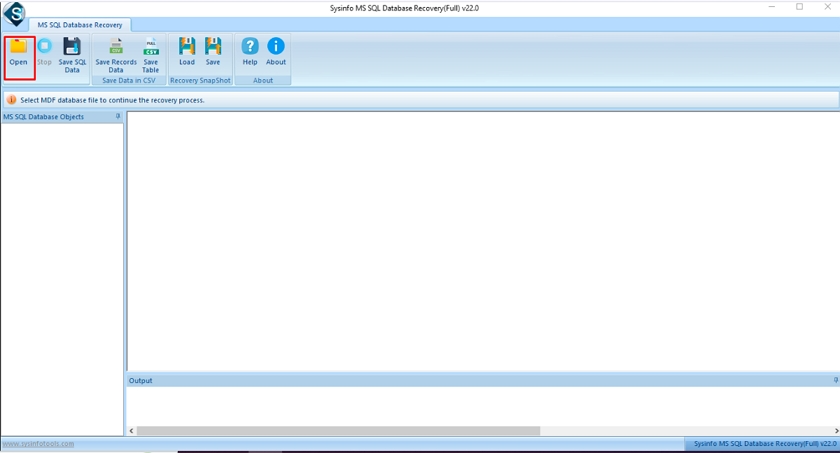
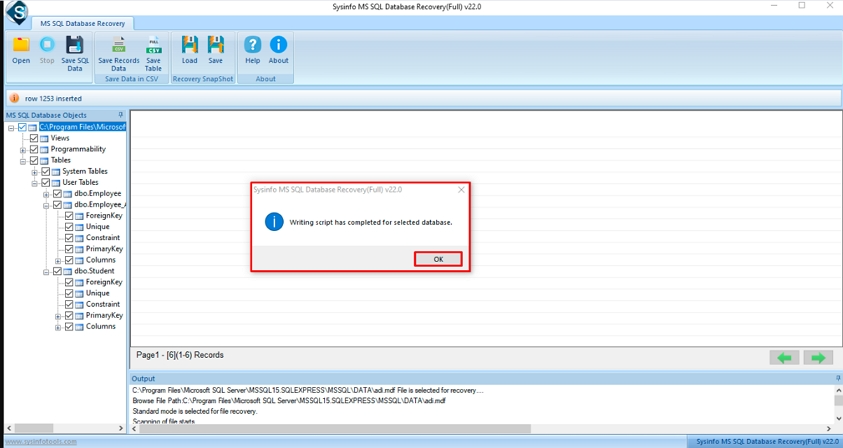
- To start, launch the SQL Database Recovery software on your PC.
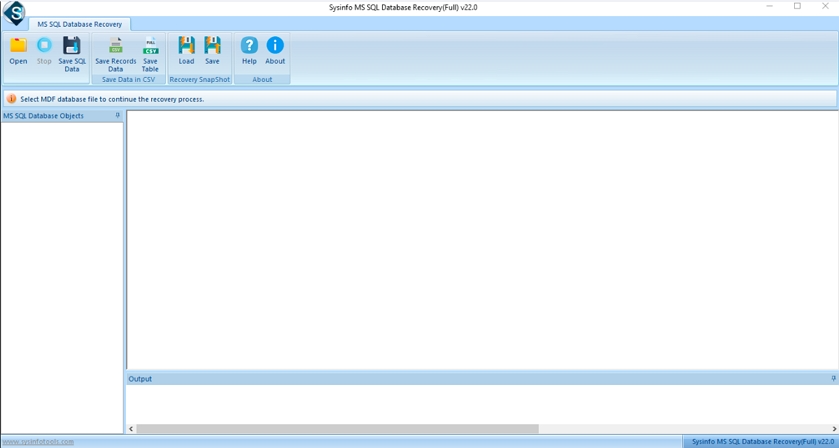
- After that, tap on the Open button and add the files that need to be fixed.
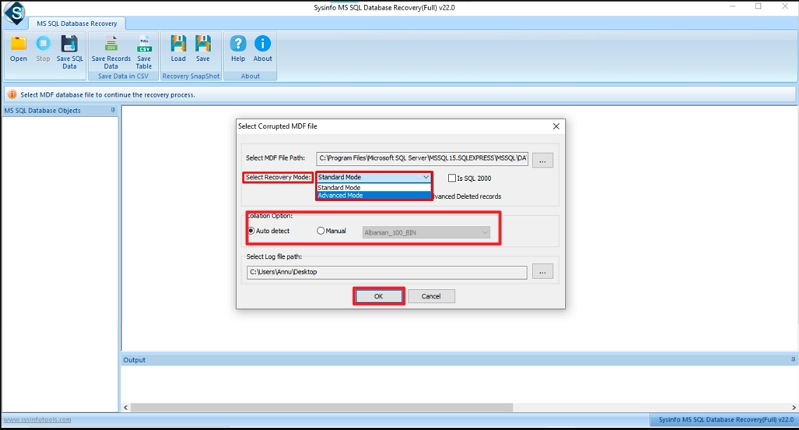
- Further, pick from the recovery modes as Standard or Advanced and choose the Collation option. Then, hit Ok.
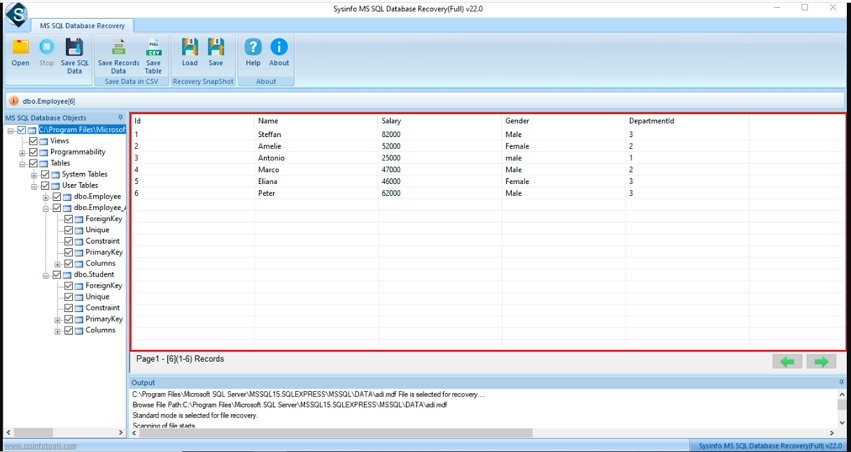
- Meanwhile, you can preview the files, folders, or subfolders of the files added in the tool.
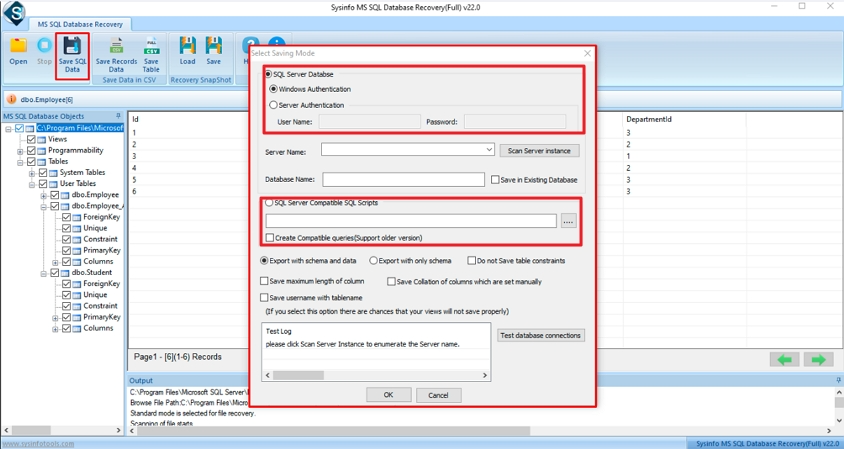
- Moving ahead, choose either SQL Server Database or SQL Server Compatible Scripts and then click the OK button.
- Lastly, a pop-up message will appear on the screen, and your process will be completed, tap Ok.
What are The Core Features of The Software?
- It scans damaged MDF and NDF files and pulls out the data it can find.
- You get a preview first, so you can see what is still recoverable.
- The original database layout stays the same after recovery.
- It can handle badly corrupted database files without crashing in the middle.
- You can save the recovered data back into SQL Server or as scripts.
Real Case ScenarioA small logistics company hit Error 8998 during a routine DBCC check on a Monday morning. The database slowed to a crawl, and queries started timing out across the team. Manual repair ran, but deleted rows that were still needed, and fixed almost nothing structural. They loaded the corrupted MDF into DatabaseFileRecovery SQL Database Recovery Software the same afternoon. Most tables came back intact, and the team was back to work before the end of the day. |
Final Verdict
Allocation page corruption spreads fast, and manual repair commands accelerate that damage under real conditions. One REPAIR_ALLOW_DATA_LOSS run, and rows, tables, or entire objects disappear without recovery. To resolve SQL Server Error 8998 without that risk, DatabaseFileRecovery SQL Database Recovery reads the MDF file directly and recovers what DBCC cannot. Tables, stored procedures, and views come back intact, with no rebuild, no data permanently gone.
Frequently Asked Questions
Q1. Can DBCC CHECKDB REPAIR_ALLOW_DATA_LOSS fix Error 8998?
Ans. It can fix structural issues, but there’s a real chance of losing data. If that risk isn’t acceptable, tools like the DatabaseFileRecovery SQL Recovery Tool can help recover data more safely.
Q2. What causes page errors on GAM, SGAM, or PFS pages?
Ans. These errors usually come from disk issues, sudden shutdowns, or failed write operations. In some cases, faulty storage or system crashes can also damage these allocation pages.
Q3. How do I identify which pages are specifically affected?
Ans. You can run DBCC CHECKDB or CHECKALLOC to get detailed error output. It lists page IDs and allocation issues so you can understand which parts of the database are impacted.
Q4. Is my data still accessible if I see Error 8998?
Ans. In many cases, some data remains accessible, but stability becomes unpredictable. Using the DatabaseFileRecovery MS SQL Database Recovery can help extract accessible data before things worsen.
Q5. How can I prevent Error 8998 from occurring again?
Ans. Regular backups, proper shutdowns, and stable storage help reduce risk. You can also use tools like the DatabaseFileRecovery SQL Database Recovery Software to monitor and handle early signs of corruption.
About The Author:

Meet Shivam, an experienced SEO executive and content strategist. He combines creativity with strategy to craft engaging content that connects with audiences and supports brand goals. With strong expertise in digital marketing and content planning, Shivam helps businesses thrive online.
Related Post